
Introduction: The Shift from Voluntary to Mandatory
For businesses operating within Southeast Asia, the era of "greenwashing" or threatening sustainability as a marketing footnote is over. Carbon reporting has rapidly evolved from a corporate social responsibility (CSR) preference into a strict regulatory requirement.
As we move through 2026, the landscape is dominated by the Thailand Climate Change Act, which has institutionalized carbon transparency. Central to navigating this new legal and commercial reality is the categorization of Greenhouse Gas (GHG) emissions into three distinct "Scopes" as defined by the GHG Protocol. Understanding these Scopes is no longer just for sustainability officers; it is essential knowledge for procurement, operations, and C-suite executives across the region.
The Three Scopes Explained
Scope 1: Direct Emissions (Ownership and Control)
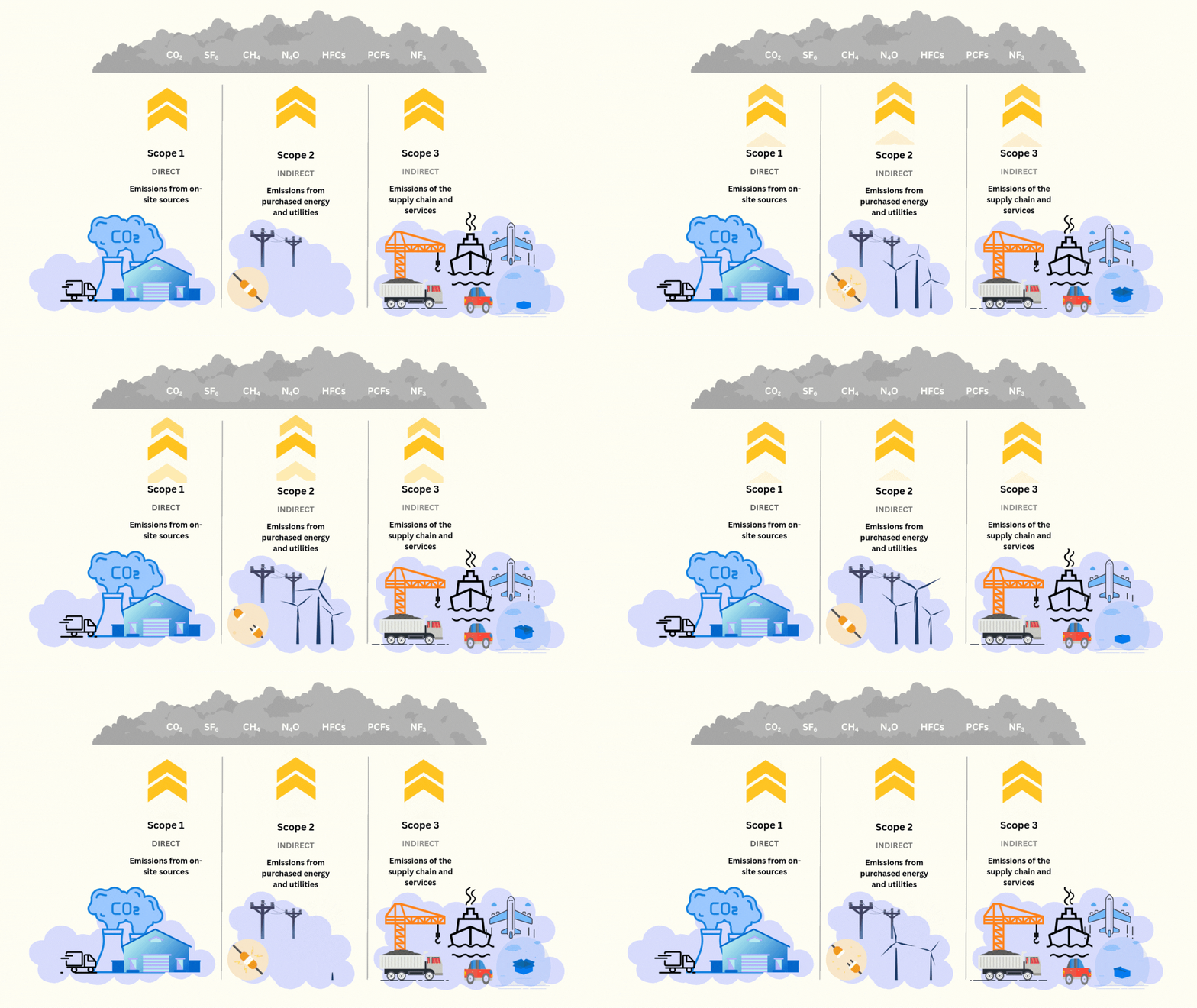
Scope 1 encompasses emissions from sources that your company owns or controls directly. In the context of a Thai manufacturing plant, this typically involves "stationary combustion," such as fuel burned in on-site furnaces or backup diesel generators. It also includes "mobile combustion" from company-owned delivery fleets. For Southeast Asian firms, tracking Scope 1 is the most straightforward, as the data—fuel receipts and meter readings—is already within the company's financial records.
Scope 2: Indirect Emissions (Purchased Energy)
Scope 2 covers emissions created during the production of energy that your company purchases and consumes. In Thailand, this primarily relates to your electricity bill from the Provincial Electricity Authority (PEA) or Metropolitan Electricity Authority (MEA). While the emissions happen at the power plant, the "credit" for those emissions belongs to your facility. As Thailand transitions its grid toward more renewables under the PDP 2024-2037, companies can lower their Scope 2 footprint by investing in on-site solar or purchasing Renewable Energy Certificates (RECs).
Scope 3: The Value Chain (All Other Indirect Emissions)
Scope 3 is the most complex but critical category, often representing over 70% to 90% of a company’s total footprint. These are emissions that occur in your value chain, both "upstream" (your suppliers) and "downstream" (your customers). This includes everything from the carbon cost of raw materials extracted in Indonesia to the carbon emissions from employees commuting to work everyday.
The Southeast Asian Context: Unique Challenges
Southeast Asian supply chains face a unique set of pressures. Unlike European markets, our industrial zones often have high density and rely on varied grid emission factors. Under the Thailand Climate Change Act (2026), reporting Scope 1 and 2 is now a baseline for large-scale emitters.
However, the real pressure is coming from "Export Pressure." Global giants like Apple, IKEA, and BMW have set aggressive Net Zero targets that include their entire supply chains. If a Thai supplier cannot provide accurate Scope 3 data, they risk being delisted in favor of a "greener" competitor. This creates a "trickle-down" effect: to keep your contract with a global buyer, you must demand data from your own Tier 1 and Tier 2 suppliers.
Strategic Roadmap for Thai Firms
To remain competitive, Thai firms must transition from reactive to proactive management.
Digitalization of Data: Move away from manual spreadsheets. Real-time energy monitoring is now the standard for verifying Scope 2 reductions.
Supplier Engagement: Implementing a "Supplier Code of Conduct" is no longer optional. You must require your logistics and raw material partners to provide carbon data as a condition of their contract.
Local Alignment: Leverage the Thailand Greenhouse Gas Management Organization (TGO) resources to align local reporting with international standards like the EU’s CBAM, ensuring that Thai exports aren't penalized at the border.
By mastering the three Scopes, Southeast Asian businesses can transform a regulatory burden into a competitive advantage, securing their place in the global green economy.